Why is oak a good choice for a bookcase that gets daily use?
Oak suits a frequently used bookcase because it combines strength, stability and a surface that can be renewed. Books are heavy, shelves are loaded for years, and a bookcase in a living room, bedroom or study is often reached for every day. Solid oak handles that kind of routine well when the shelves are properly made and the finish is cared for.
The main reason is simple: oak is a hard, dense hardwood with natural resistance to the small knocks that build up over time. A paperback slid back into place, a hardback dragged from a shelf, a decorative object moved around, all of these can mark softer materials. Solid oak has enough body to stand up to ordinary handling without feeling fragile. That matters more in a bookcase than in a piece that is only looked at.
It also helps that oak has a clear, attractive grain. On a tall or narrow unit, grain gives the shelves and panels visual depth, so the furniture does not look flat even when the room is plain. In compact rooms, an 80 cm wide bookcase can still feel substantial without taking over the space. Oak can make that smaller footprint look deliberate rather than temporary.
Strength where a bookcase actually needs it
A bookcase is not judged by looks alone. The key stress points are the shelves, the uprights, the back and the joints. Books place a steady downward load, and they also push sideways when rows are tightly packed or when a shelf is emptied unevenly. A good oak bookcase needs enough shelf thickness to resist bowing, plus a frame that keeps the whole unit square.
Thin shelves can sag over time, particularly when they carry large art books or sets of hardbacks. Oak is strong, but thickness and support still matter. A shelf that spans a wide gap needs more depth than a short shelf fixed between close uprights. If the bookcase is intended for everyday use, it is worth checking whether the shelves look substantial and whether they have support at the back or sides. Strength is not only about the timber species, it is also about how the timber is used.
Joint construction is another quiet factor. A bookcase that is regularly loaded and unloaded benefits from joints that hold their shape. Dovetail, mortise and tenon, or well-fitted modern joinery can all help, depending on the design. The point is not to chase a fancy name, but to notice whether the parts meet cleanly and whether the structure feels consistent. Rigid joints reduce wobble, and wobble is what often makes a bookcase feel tired long before the wood itself is worn.
A back panel also does more work than many people expect. It helps stop the frame from racking, which is the sideways lean that can develop when a unit is moved or loaded unevenly. Solid backs are robust, though they add weight. Thin backs can still be effective if they are fixed well. For a frequently used bookcase, the back should be part of the structure, not just a decorative cover.
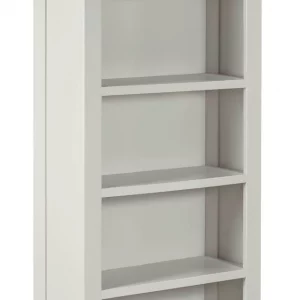
Why oak works in busy rooms
Bookcases rarely sit in unused corners. They sit near desks, beside chairs, under windows, against hallway walls or in bedrooms where books pile up alongside other belongings. That means they meet dust, sunlight, temperature changes and the occasional bump from daily life. Oak is forgiving in this setting because it has a firm surface and a finish that can be maintained.
A protective finish makes a practical difference. It slows moisture entering the wood and makes dust easier to remove. It also changes how marks behave. A light scuff on a finished oak surface may be far less noticeable than the same mark on an unfinished one. The finish does not make the wood indestructible, but it gives the surface a buffer. Over time, that buffer can be cleaned and, where needed, renewed.
Oak also responds well to simple surface care. Routine dusting with a soft cloth is usually enough to keep the grain clear. For sticky marks, gentle cleaning is preferable to soaking the wood. Standing water, harsh cleaners and abrasive pads are the sorts of things to avoid, especially around joints and shelf edges. Good care does not need to be complicated. It just needs to be consistent enough to stop grit and moisture settling into the finish.
There is a trade-off to be aware of. Oak is hard, which is useful, but it is still wood. It expands and contracts with changes in humidity. That movement is normal and should be allowed for in the construction. A well-designed bookcase will not fight the timber at every point. Panels may sit in grooves, fixings may allow slight movement, and finishes may be applied in a way that reduces uneven stress. This is one reason a carefully made solid oak piece tends to age better than a flimsy item with no allowance for the material.
Fit for smaller living spaces
For compact living rooms, bedrooms and studies, the appeal of oak is not only durability. A narrower bookcase can work hard without dominating the room. An 80 cm wide design leaves room for a chair, desk or bedside space while still giving books a proper home. Because oak has a strong visual presence, the unit can look intentional even in a smaller footprint.
Placement still matters. A bookcase against an outside wall may see more temperature variation than one on an internal wall. A spot near a radiator can dry the air unevenly, while a damp wall can affect the lower panels. None of this means oak is unsuitable. It means the furniture should be placed with ordinary common sense, away from constant moisture and direct heat where possible. If the room tends to be humid, ventilation and steady conditions matter more than the type of finish alone.
Load capacity deserves attention too. A bookcase may be labelled for books, but not all shelves are planned for the same weight. Heavy volumes belong on lower shelves where possible, both for stability and to reduce strain. Taller units should be fixed securely to the wall where appropriate, especially in homes with children or pets. That is a practical safety point rather than a reflection on the wood. Any furniture that is tall and narrow can tip if it is overloaded at the top or pulled forward.
When browsing durable wooden bookcases, the better choice is usually the one that matches the room and the intended load. A solid oak bookcase for a study full of textbooks has different demands from one used mainly for novels and ornaments. Oak gives a strong starting point, but shelf thickness, joint construction and finish still shape how well the piece performs. Those details are worth comparing, particularly if the bookcase will be used every day.
Solid oak furniture also has the advantage of looking natural in a range of settings. Its grain can sit comfortably with painted walls, neutral fabrics, darker floors or simple modern pieces. The surface is not uniform in the way manufactured boards often are, and that variation helps it blend into lived-in rooms. For people furnishing a compact study or a bedroom reading corner, that combination of practicality and appearance is a large part of the appeal.
What to check before choosing
A useful check is to look at the proportions of the unit. Are the shelves deep enough for the books being stored, without being so deep that the front of the shelf becomes wasted space? Are the uprights substantial enough to carry the span? Does the back sit neatly, and does the whole frame appear square? These questions are more revealing than surface appearance alone.
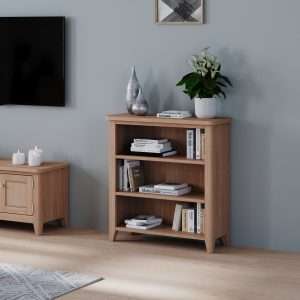
The finish deserves a close look as well. A smooth, even finish should not feel sticky or rough. Edges should be sealed, since shelf fronts and corners receive the most handling. A finish that covers the wood evenly helps protect the surface while allowing the grain to remain visible. If the bookcase is going into a busy room, easy cleaning is a real benefit.
Some buyers like oak because it can be repaired rather than discarded when a mark appears. Minor surface damage may be reduced by careful cleaning or local refinishing, though deeper cuts and structural problems call for more skill. A heavy bookcase should not be strained by dragging it across a floor. Lifting it with help and placing it carefully protects both the furniture and the room.
At oakcastlefurniture.co.uk, the focus is on solid oak furniture, including 80 cm wide bookcases for compact living rooms, bedrooms and studies. That context suits readers who need useful storage without assuming a large room. A bookcase in that size range still needs the same care in selection: sound shelves, steady construction and a finish that can cope with daily use.
Oak is not the only material that can make a good bookcase, but it has a strong case when the furniture will be used often. It offers hardness for daily handling, enough weight to feel settled, grain that hides the marks of normal life, and a surface that can be maintained. Paired with sensible shelf design and a protective finish, it gives a bookcase the best chance of staying useful and attractive for years.